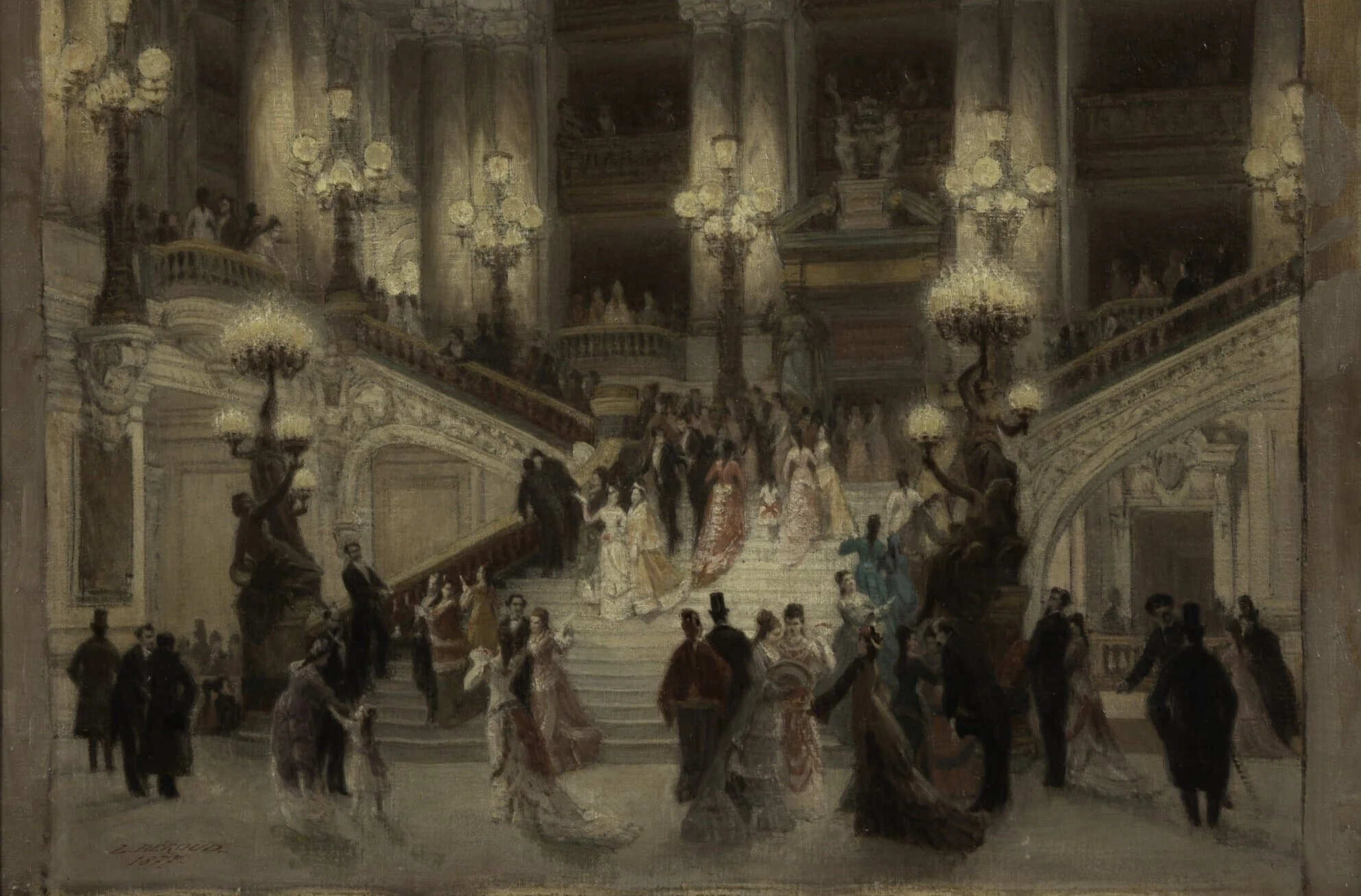
L’escalier de l’Opéra in 1877 By Louis Béroud (1852–1930 (©Musée Carnavalet)
Why vinyl records, film cameras, and borrowed memories keep pulling us backward and what our obsession with “golden ages” reveals about how we survive the present
Lately, everything feels a little… sepia-toned. Vinyl records spinning again. Film cameras dangling from wrists. Grainy photos, washed-out colors, clunky fonts that look like they belong to a Windows 98 screen. We call it nostalgia-core, or sometimes just analog but for some it may be a cry for a time we swear was gentler. And with it comes an age old saying: things were better back then.
But were they?
I found myself thinking about this after watching Midnight in Paris (2011), Woody Allen’s love letter to longing. The film follows Gil Pender, a disillusioned American writer vacationing in Paris with his fiancee. Every night at midnight, Paris does something magical, it sends Gil back to the 1920s, what he believes to be the golden age of art and literature. Suddenly, he’s drinking with Hemingway, editing his novel with Gertrude Stein, and casually bumping into Picasso and Dali like it’s no big deal.
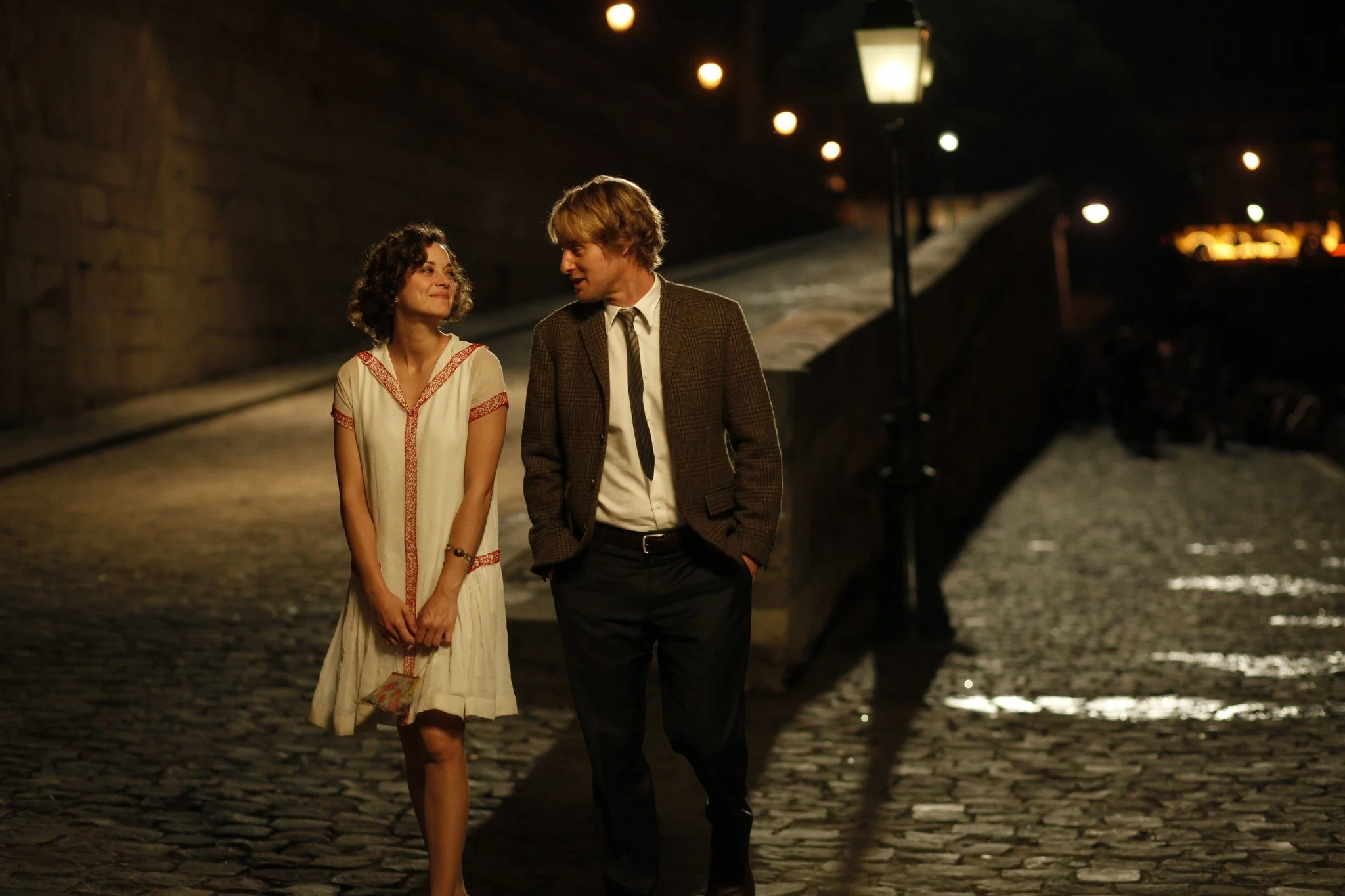
Midnight in Paris (2011)
To Gil, the 1920s are everything the present isn’t. It’s romantic, meaningful, electric. A time when writers wrote with purpose and artists starved beautifully for their craft. But then comes the twist that rearranges the entire premise of the film (And my view of clenching to the past only happens to my generation, one might call it a eureka moment per se). Gil falls for Adriana, a woman from the 1920s, only to discover that she longs for another time entirely, the Belle Époque of the 1890s. To her, that was the real golden age. Everyone, it seems, believes happiness exists just before their own moment in history.
Which brings us back to now. Why is my generation often accused of being chronically online and overly so desperate to look backward? Why are we dressing like our grandparents, romanticizing eras we never lived in, and fetishizing “simpler times” that, frankly, were simpler mostly because we weren’t there yet? Maybe this isn’t a Gen Z or a millennial thing after all. Maybe humans have always romanticized the past, polishing it until it glows. The past is safe that way. It cannot argue back. We can edit out the mess, the boredom, and live happily inside our safe “what if” bubble.
Is nostalgia then a coping mechanism? Perhaps. Living in an imagined past is easier than confronting a present that demands accountability and uncertainty. In our heads, we are always braver, more artistic, more in love.
Still, there’s something comforting about this longing. Sitting in a cafe, sipping coffee and smoking the day away, watching the city move on without you, it's not that we want to escape time. Maybe we’re just searching for meaning, and the past feels like it already figured it out.
But nostalgia today feels different in texture. Unlike Gil Pender, we don’t need a magical car to visit the past. We have algorithms that shoves it in our face daily. Instagram for you page curated like memory museums. TikTok trends reviving songs every 10 years. We’re not just remembering, we're also remixing. Creating an imagined past that never fully existed, smoothing out the wars and all the bad things that happened only keeping the aesthetics and the romance.
And maybe that’s the key.
The past is safe because it’s finished. It can’t disappoint us anymore. We can edit it, frame it, and remember it the way we want it. Living in the present, on the other hand, is unresolved. Full of climate anxiety, economic uncertainty, and the exhausting pressure to be productive at all times. The future feels abstract and intimidating. The present demands accountability. But the past? The past asks nothing from us.
So yes, maybe romanticizing the past is a coping mechanism. A beautifully dressed escape pod.
When we say we were “born too late,” what we often mean is: we are tired. Tired of constant updates, endless comparison, and a sense that everything important has already happened. Imagining ourselves in another era allows us to be protagonists again, to believe there was a time when art mattered more, love feels easy and life? Life just serenade our hands to where our hearts long for the most (See, it’s that easy to romanticize the past)
When Gil finally understands that every era believes another one was better, he chooses to stay. Not in the 1920s. Not in the Belle Époque. But here. Now. Today. The film doesn’t tell us to abandon nostalgia. It tells us to stop mistaking it for the truth.
Perhaps the goal isn’t to reject or live in the past, but to borrow from it consciously. To let analog rituals slow down our digital lives. To allow romance, slowness, and intention back into our days without pretending that another era would have magically fixed us.
Because one day, inevitably, someone will look back at this moment and call it a golden age. (Highly unlikely, but hey those European bastards swimming in a pool full of poo would never think we would romanticize their era, right?)
If the children and grandchildren of our generation are lucky enough to read this amazing piece, I hope they imagine our time with more warmth, and perhaps even more tenderly than we, who actually lived it, remember it.
And maybe that’s the key.
